
⛽ Think your car suddenly has a major mechanical problem? It might actually be what's in your tank.
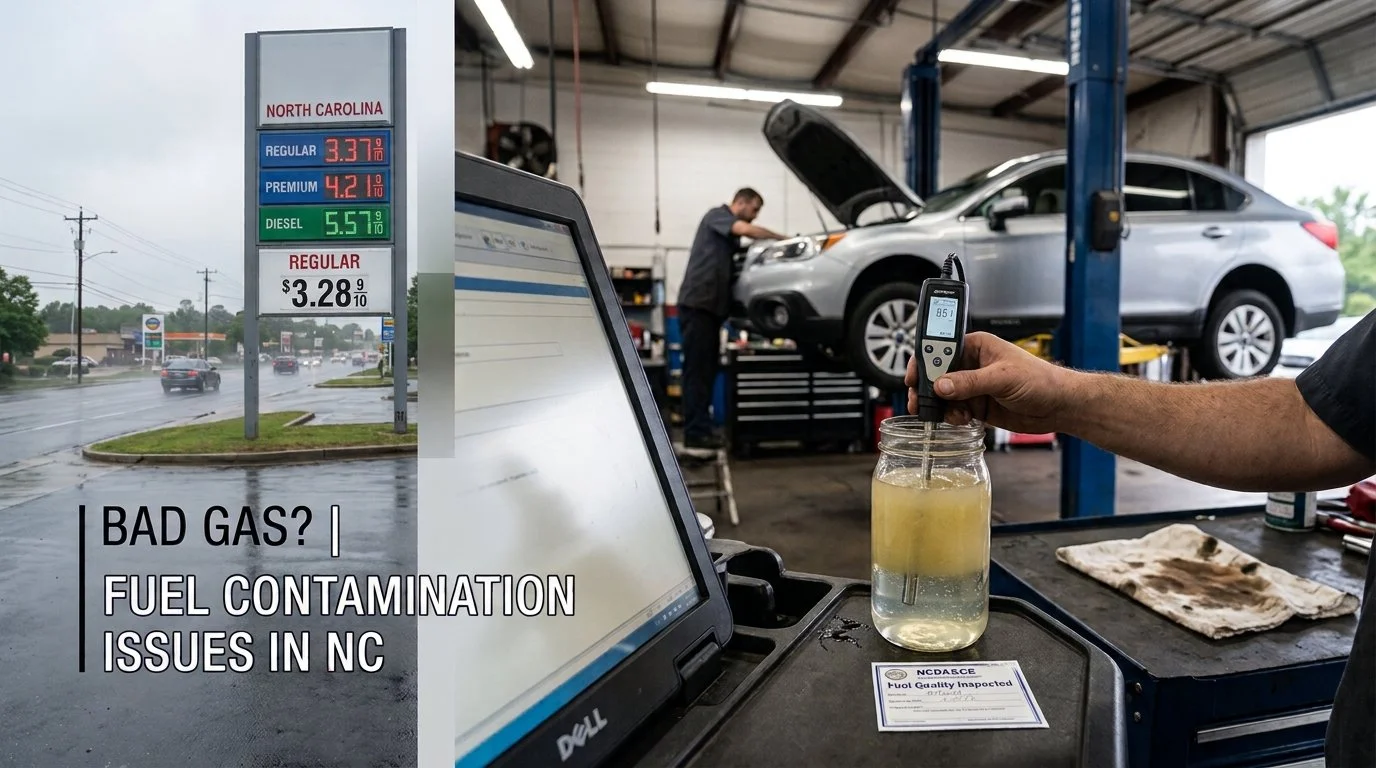
Most drivers don't give much thought to the fuel going into their vehicles. We expect gasoline and diesel at the pump to be clean and meet the proper quality standards. But contaminated fuel and fuel cross-contamination do happen, and the symptoms can range from poor engine performance to a vehicle that won't start.
At Wasp Automotive, we've seen firsthand how fuel quality problems can affect vehicle performance and create symptoms that closely resemble mechanical failures. Proper diagnosis is essential to identifying the source of the problem and determining what repairs are actually needed.
And this isn't just a theoretical concern in North Carolina. A September 2026 investigation by WRAL found that state inspectors had confirmed fuel-quality problems during investigations at 37 North Carolina gas stations between January 2022 and June 2026. The problems included water and sediment contamination, gasoline that failed quality standards, and instances of gasoline and diesel being delivered into the wrong storage tanks.
What Are the Symptoms of Bad Gas in a Car?
Contaminated fuel can affect how an engine runs, but the symptoms vary depending on the type and amount of contamination.
Common bad fuel symptoms include:
Rough idling, engine sputtering, or shaking
Hesitation or loss of power during acceleration
Engine misfires
An illuminated check-engine light
Stalling while driving
Difficulty starting
An engine that cranks but won't start
Sometimes these symptoms begin shortly after leaving the gas station. In other cases, the vehicle may not start after a fill-up.
Because these symptoms can also indicate ignition, fuel delivery, sensor, or other mechanical problems, proper diagnosis is important. Don't assume the problem is bad gas, but don't overlook the possibility either.
What Causes Fuel Contamination?
The North Carolina Department of Agriculture and Consumer Services (NCDA&CS) investigates several types of fuel quality problems.
Water in fuel: Water can interfere with combustion, cause poor engine performance, and potentially lead to engine failure. In gasoline containing ethanol, excess water can also cause phase separation, where water and ethanol separate from the gasoline.
Sediment and debris: Dirt, rust, and other particles can restrict fuel flow, clog filters and fuel lines, and affect engine performance.
Gasoline and diesel cross-contamination: This happens when the wrong type of fuel is delivered into a storage tank. Diesel in a gasoline tank or gasoline in a diesel tank can cause serious running problems and potentially damage fuel system components. Gasoline contamination in a diesel vehicle is particularly concerning because diesel fuel also provides lubrication for components of its high pressure fuel system.
Fuel that doesn't meet specifications: Gasoline that fails required octane, ethanol, or other quality standards can also affect engine operation.
Why Does My Car Run Bad After Getting Gas?
If your car was running normally before a fill-up and suddenly begins sputtering, misfiring, losing power, or stalling afterward, the timing is an important diagnostic clue.
The same is true if your vehicle won't start after refueling.
A fuel quality problem isn't the only possible explanation. A failing fuel pump, ignition component, sensor, or other mechanical issue can produce similar symptoms.
When bringing your vehicle in for inspection, be sure to tell the technician about the fill-up and any changes you noticed afterward. Include where and when you purchased the fuel, what grade or type you bought, and when the symptoms began. That information can help guide the diagnostic process.
What Should You Do If You Suspect Bad Gas?
If you think your vehicle may have received contaminated fuel, take these steps:
Save your fuel receipt. Keep the paper receipt or electronic purchase record.
Record the details. Write down the station's name and location, pump number if known, fuel type or grade, and date and time of purchase.
Have the vehicle diagnosed. Explain the symptoms and when they started. If the vehicle is running poorly or won't start, arrange to have it inspected rather than assuming the problem will resolve itself.
Keep your documentation. Save towing receipts, diagnostic reports, repair estimates, and invoices.
Report the suspected problem. Contact the North Carolina Department of Agriculture and Consumer Services Fuel Quality Program.
How to Report Bad Gas in North Carolina
The NCDA&CS Fuel Quality Program investigates consumer complaints involving gasoline, diesel, and other fuels sold in North Carolina.
You can submit a complaint online or call the Fuel Quality Laboratory at 984-236-4770.
Report a Fuel Quality Problem to NCDA&CS
State inspectors may collect fuel samples from the station's pumps, check storage tanks for contamination, and review delivery and maintenance records. If fuel fails to meet state specifications, the affected product can be taken out of service until the problem is corrected and the fuel passes reinspection.
Reporting promptly is important. If the suspected fuel has already been removed or replaced before inspectors arrive, the state may not be able to independently confirm what was originally sold.
How Can a Repair Shop Diagnose Contaminated Fuel?
Diagnosing a suspected bad fuel problem involves more than simply draining the tank. A technician needs to evaluate the vehicle's symptoms, inspect the fuel system, and determine whether the fuel itself may be contributing to the problem.
Depending on what the diagnosis reveals, repairs may involve draining and cleaning the fuel system, replacing filters, inspecting fuel injectors, or repairing components affected by contamination.
The appropriate repair depends on the type of contamination and how far it has affected the vehicle. The goal is to identify the actual problem rather than guess at the cause or recommend unnecessary repairs.
At Wasp Automotive, we're experienced in diagnosing complex drivability concerns and helping drivers get to the source of what's happening with their vehicles.
If your car starts acting up after a fill-up, give us a call. We're always here to help you sort it out.